
Donec efficitur, ligula ut lacinia
viverra, lorem lacus.
Donec efficitur, ligula ut lacinia
viverra, lorem lacus.

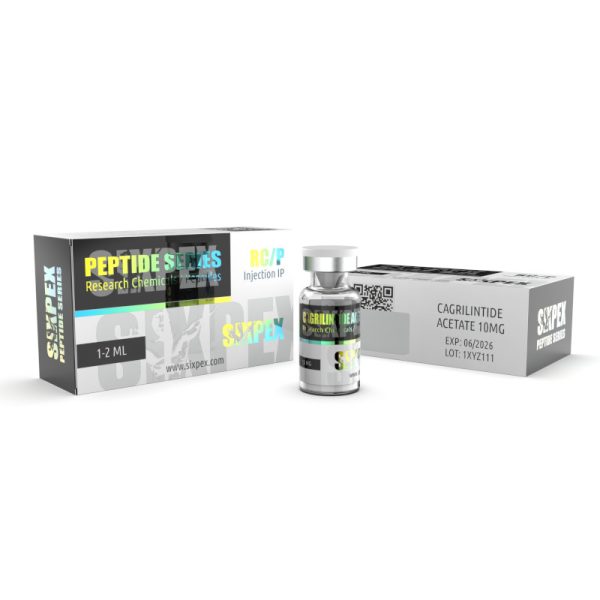
$140.00
2ml vial
Cagrilintide acetate is a long-acting amylin receptor agonist. Amylin is a hormone released alongside insulin that helps regulate appetite, stomach emptying, and feelings of fullness after eating.
Boosts satiety signals in the brain
Significantly reduces appetite
Slows gastric emptying
Decreases portion size and meal frequency
Often studied alongside GLP-1 receptor agonists
Primarily developed for obesity treatment
It has gained attention for its ability to enhance weight loss, especially when paired with GLP-1–based medications. Sixpex Michigan
Cagrilintide is administered once per week. Because it strongly affects appetite and digestion, dosing typically increases gradually to improve tolerance.
0.3 mg once weekly – starting dose
0.6 mg once weekly
1.2 mg once weekly
2.4 mg once weekly
4.5 mg once weekly – highest studied dose
Weeks 1–4 → 0.3 mg
Weeks 5–8 → 0.6 mg
Weeks 9–12 → 1.2 mg
Weeks 13–16 → 2.4 mg
Week 17+ → 4.5 mg
Many individuals experience meaningful appetite control between 1.2 mg and 2.4 mg without needing to increase further.
Ongoing nausea or vomiting
Severe fullness or bloating
Trouble maintaining adequate calorie intake
Appetite suppression already sufficient
In practice, tolerability usually determines the maximum dose rather than lack of effectiveness.
Cagrilintide is given as a subcutaneous injection. In clinical settings, it may be available as a prefilled pen or a lyophilized powder that requires reconstitution.
Total milligrams (mg) divided by total milliliters (ml) = final concentration
Concentration determines how much volume equals a specific dose
4.5 mg mixed with 1.5 ml
Final concentration = 3 mg/ml
Approximate volume equivalents:
0.1 ml ≈ 0.3 mg
0.4 ml ≈ 1.2 mg
0.8 ml ≈ 2.4 mg
Accurate dilution is essential to avoid dosing errors. This explanation is for general understanding only.
Faster onset of fullness
Smaller meal portions
Mild appetite reduction
Strong appetite suppression
Fewer meals or snacks
Noticeable weight reduction
Maximum satiety signaling
Sustained appetite control
Improved long-term calorie regulation
0.6 mg → about 6–8% body weight reduction
1.2 mg → about 10–12% reduction
2.4–4.5 mg → roughly 15–17% or more in longer studies
Cagrilintide appears particularly effective at controlling hunger, which is why it is often paired with GLP-1 therapies for enhanced results.
Side effects tend to increase as the dose rises.
Nausea
Early fullness
Stomach heaviness
Constipation
Vomiting
Bloating
Difficulty finishing meals
Fatigue due to reduced calorie intake
Increase doses slowly
Eat smaller meals more often
Limit high-fat or very large meals
Stay well hydrated
Delay dose increases if nausea continues
Individuals with serious gastrointestinal motility disorders
History of gastroparesis
Pregnant or breastfeeding individuals
Those unable to maintain adequate nutrition
Because it strongly slows gastric emptying, careful monitoring is important in anyone with digestive sensitivities.
Cagrilintide acetate is a powerful amylin-based therapy designed to improve satiety and reduce overall calorie intake. Studied at doses ranging from 0.3 mg to 4.5 mg weekly, it has demonstrated meaningful weight loss potential, especially when combined with GLP-1 receptor agonists.
Strong appetite suppression
Complements GLP-1 therapies
Requires gradual dose escalation
Best used within structured medical supervision
When managed properly, cagrilintide may represent a significant step forward in pharmacological weight management.
Reviews
There are no reviews yet.